RiskWise — Credit Risk Analysis
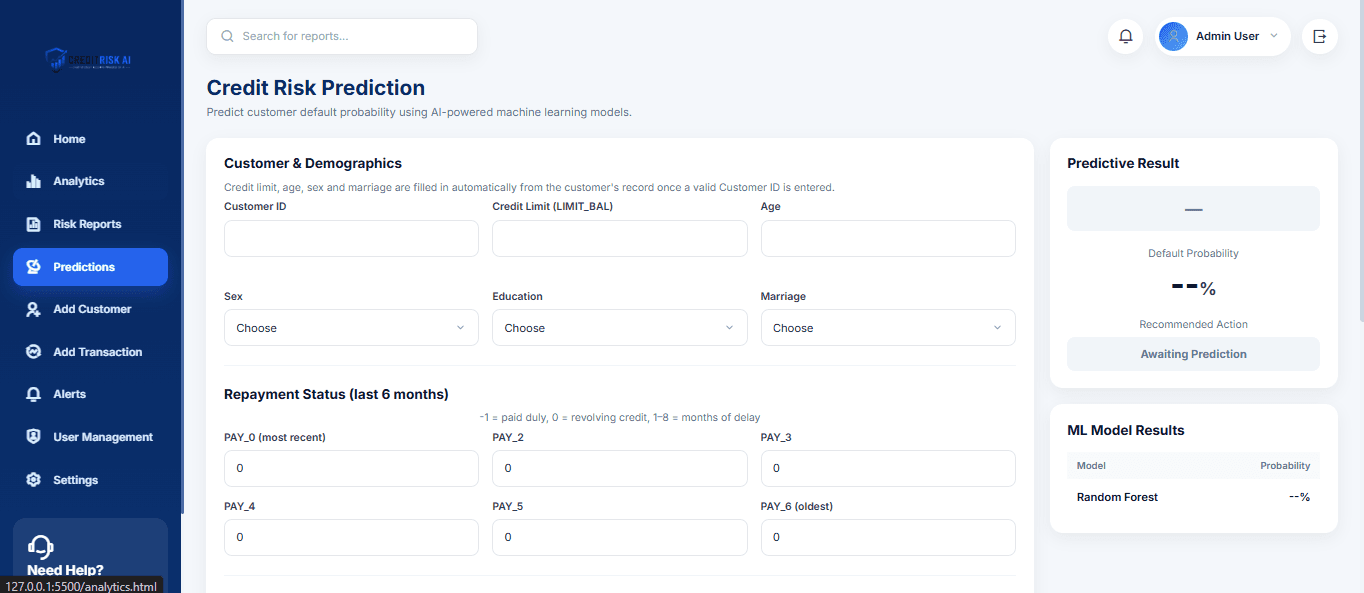
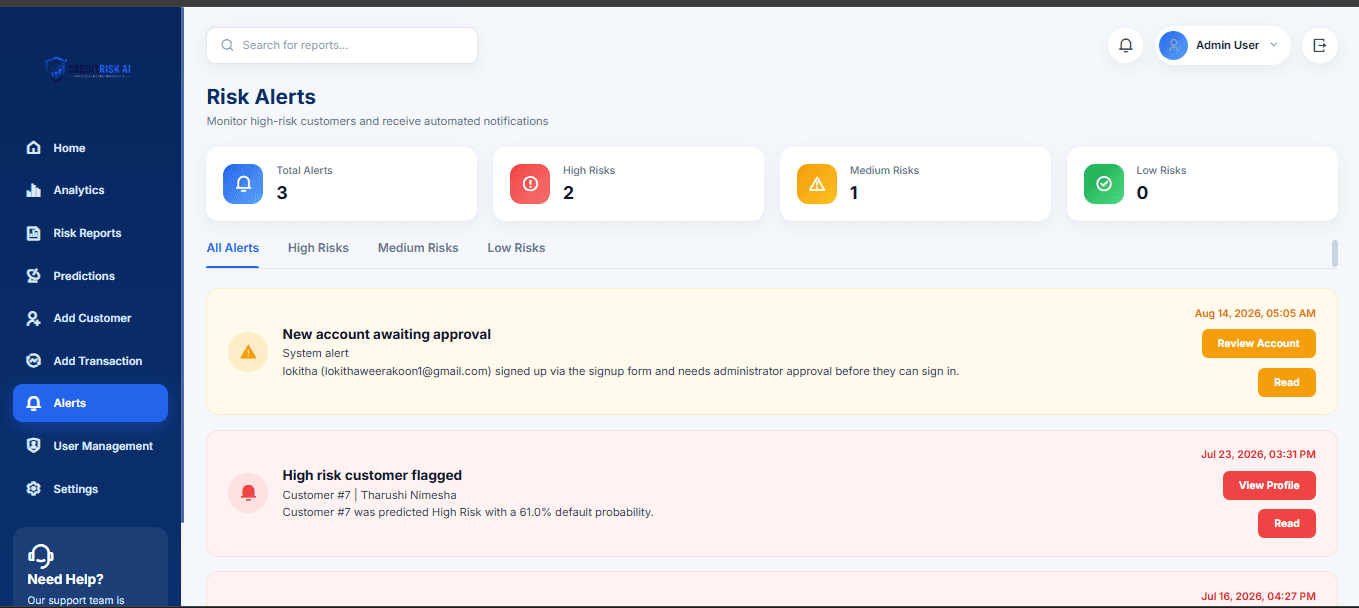
A credit-risk platform that scores customer default probability from card payment history, behind role-based access control.
- Python
- FastAPI
- scikit-learn
- Random Forest
- MySQL
- JWT
- Vanilla JS
Screens
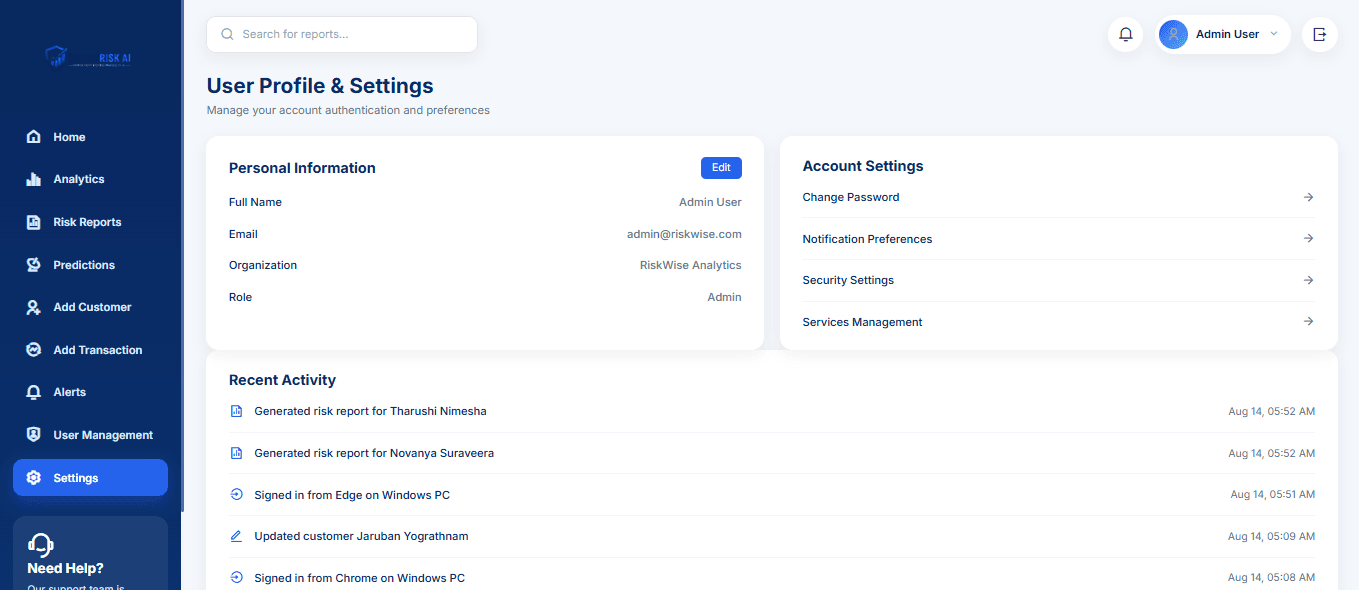
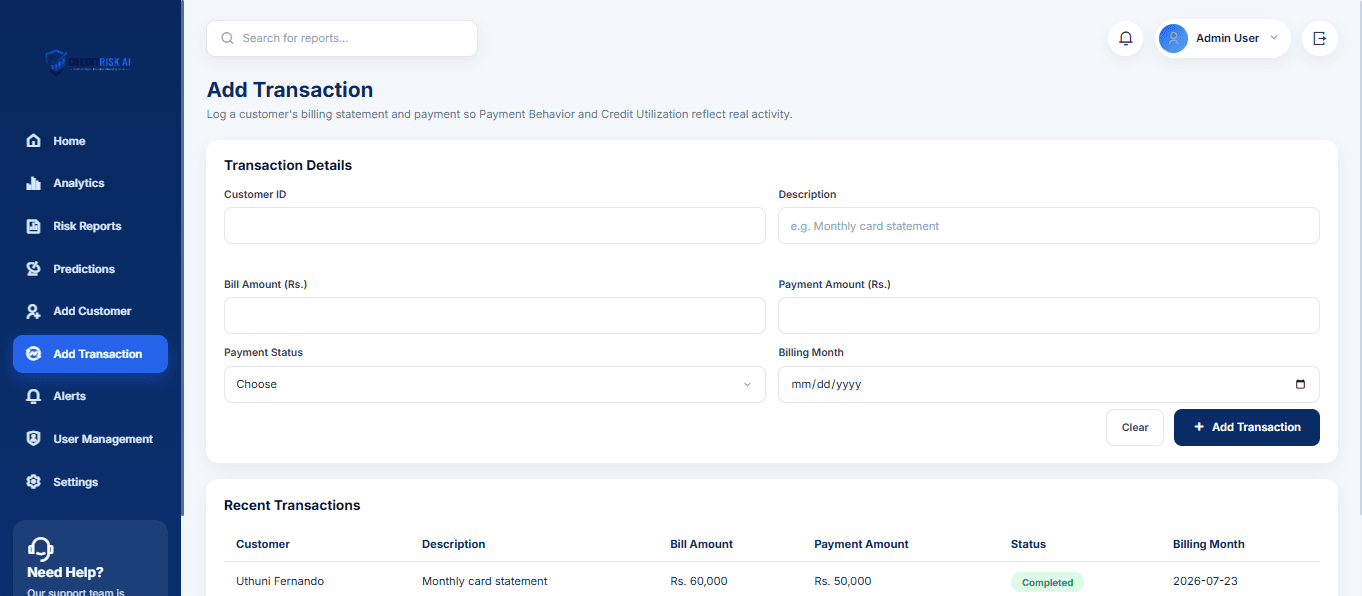
Problem
Deciding whether a card customer is likely to default is a judgement made repeatedly, on the same handful of signals, and made inconsistently when it is made by eye. The goal was to put a trained model behind that call and make its reasoning inspectable rather than leaving it as a number nobody can interrogate.
Role
Built the whole stack: data preprocessing and model training through to the FastAPI service, the MySQL schema, auth and role-based access control, and the frontend.
Key decisions
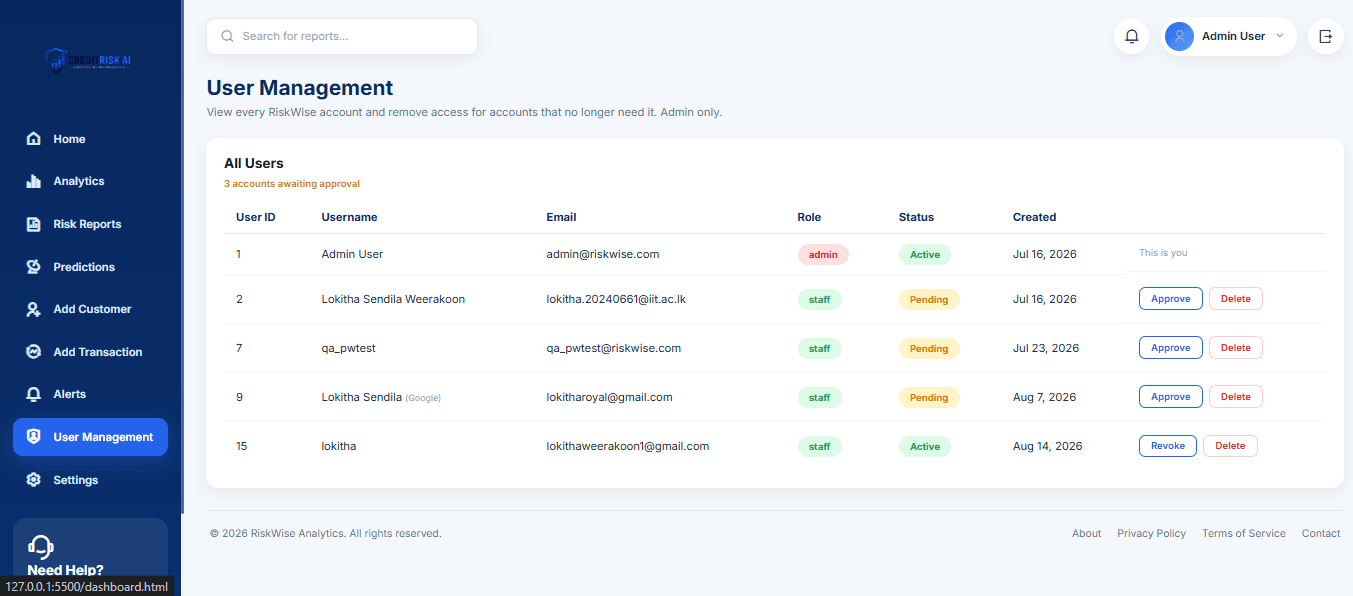
Google Sign-In sits behind an admin approval gate — an account exists only once an admin approves it, because self-service signup on a system holding customer credit data is a liability, not a convenience. The frontend is deliberately vanilla JS: the UI is forms and tables against a REST API, and a framework would have added a build step and a dependency tree without changing a single thing on screen.
Challenges
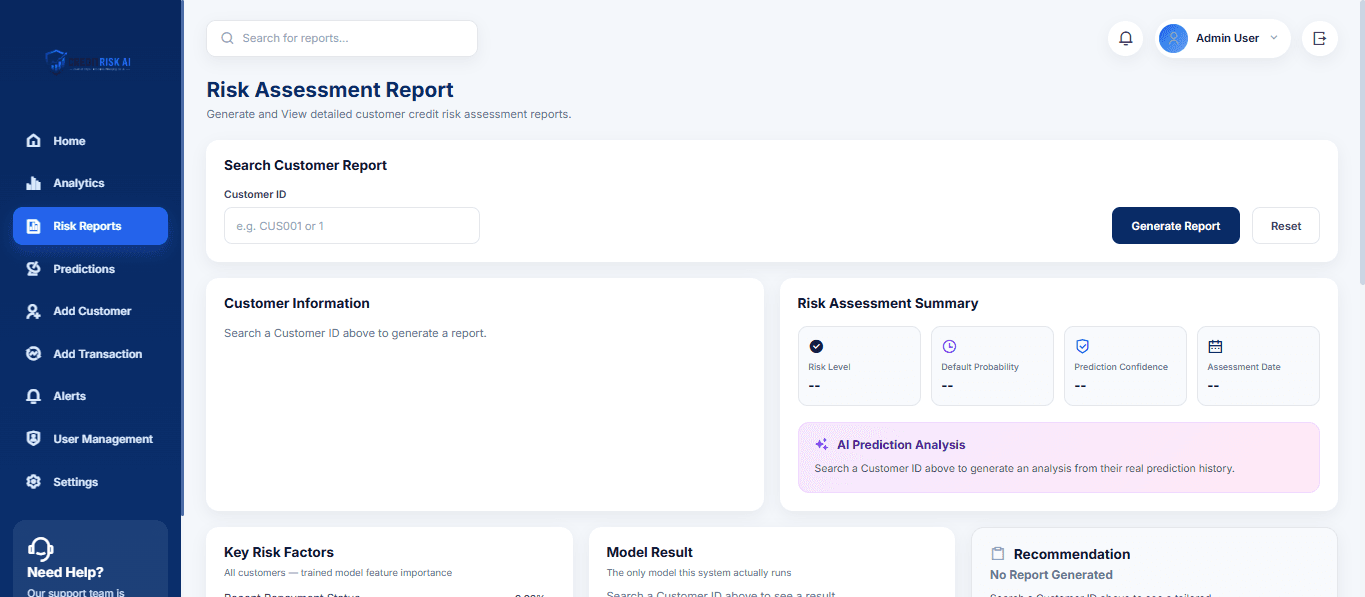
The honest difficulty was accuracy, not code. Default prediction on this data is heavily imbalanced — most customers do not default — so a model can score well on raw accuracy while being useless on the class that matters. Getting to 81.6% on held-out data meant treating the preprocessing and the choice of repayment-history features as the real work, and reading the model's feature importances rather than trusting a single headline number.
Outcome
81.6% test accuracy on held-out payment history, served live behind role-based access control.